
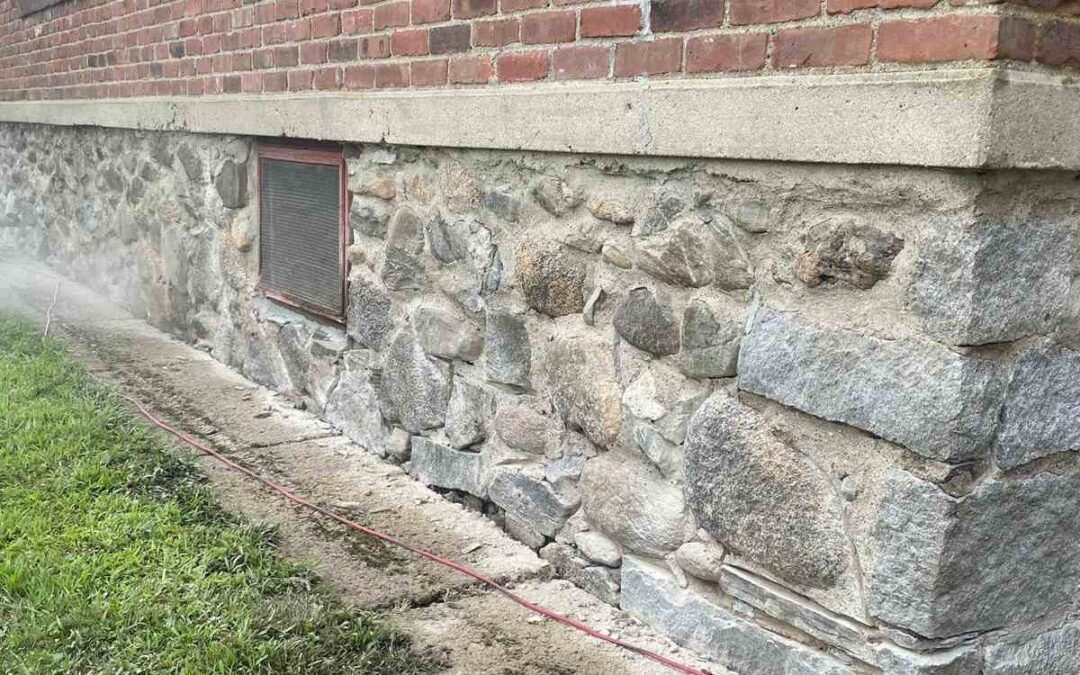
The Boston Foundation Snapshot
Historic Masonry Contractors is Boston’s leading specialist for historic foundation repair and structural stabilization, delivering BLC-compliant solutions for granite foundations, brick footings, and wooden piling preservation. By engineering repairs specifically for Boston Blue Clay and reclaimed land movement, they protect historic homes across 02108, 02116, Beacon Hill, Back Bay, and the South End.
Local Authority: Why Boston Property Owners Choose Historic Masonry Contractors
Boston foundations require historic expertise, not generic repairs, our reputation is built on preservation-first engineering and local code mastery.
In neighborhoods like Beacon Hill, Back Bay, and the North End, foundation failure is rarely simple. We’ve spent years repairing issues caused by contractors using modern methods on historic structures.
Our clients trust us because we specialize in:
1. Wooden Piling Preservation
Near the Charles River Basin, groundwater levels directly affect foundation stability. Historic homes rely on submerged timber piles that must remain saturated.
2. BLC Compliance Expertise
We handle approvals through the Boston Landmarks Commission for projects on Commonwealth Avenue, Beacon Street, and surrounding districts.
3. 2026 Seismic Retrofitting Standards
Even minor vibration matters. We regularly assess movement impacts from Logan International Airport flight paths and vibration transfer from infrastructure corridors near the legacy footprint of the Big Dig.
This level of local knowledge is why Boston property owners choose us.
Engineering for the Hub: Solving Foundation Failure in Boston Blue Clay and Reclaimed Land
Boston Blue Clay causes seasonal movement, requiring flexible foundation stabilization not rigid concrete fixes.
Much of Boston, especially the South End and Back Bay, sits on reclaimed land over Boston Blue Clay, a dense marine silt.
This material:
-
Expands with moisture
-
Contracts during dry cycles
-
Transfers movement directly into masonry walls
This creates what we call differential settlement stress.
Why Standard Repairs Fail
Generic contractors often pour rigid concrete against moving foundations.
This causes:
-
Stair-step cracking
-
Brick facade separation
-
Structural load imbalance
Our Structural Solution
We engineer based on foundation type:
-
Helical piers for Blue Clay movement zones
-
Pressurized grout injection for settlement correction
-
NHL lime stabilization for historic granite systems
This protects the building without damaging the masonry.
How Do Granite Foundations in Beacon Hill Require Different Repairs?
Granite foundations need lime-based stabilization, not cement-heavy patching.
Historic homes in Beacon Hill were often built on granite block foundations.
These systems require:
-
Breathable mortar joints
-
Flexible stabilization
-
Moisture movement control
Our Granite Foundation Process
We use:
-
Natural Hydraulic Lime (NHL) repointing
-
Petrographic mortar analysis
-
Pressure-point stabilization
This ensures compatibility with 150-year-old stone systems.
Cement patching creates failure. Lime preservation creates longevity.
Why Is the Back Bay Water Table a Foundation Emergency?
Back Bay homes depend on submerged wooden piles, and groundwater loss causes silent structural failure.
Thousands of homes in Back Bay and the South End sit on untreated wood piles driven into wet soil.
These piles remain strong only when submerged.
The Hidden Risk
If groundwater drops:
-
Oxygen reaches the wood
-
Rot begins rapidly
-
Settlement accelerates
This has been affected by:
-
Modern excavation projects
-
Long-term drainage changes after the Big Dig
-
Seasonal drought cycles
Our 2026 Monitoring System
We provide:
-
Borescope piling inspections
-
Moisture and oxygen monitoring
-
Underpinning with steel supports
-
Helical pier load transfer systems
This prevents catastrophic settlement.
2026 Foundation Performance Comparison Table
| Foundation Type | Common Boston Area | Common Issue | Preferred 2026 Repair Method |
|---|---|---|---|
| Granite Block | Beacon Hill / North End | Mortar loss + settlement | NHL pressure pointing |
| Wooden Piling | Back Bay / South End | Water table drop + rot | Helical underpinning |
| Brick Footing | Charlestown | Spalling + frost heave | Reinforced parging |
| Modern Concrete | Seaport District | Salt-air corrosion | Carbon fiber reinforcement |
How Does 2026 Boston Building Code Affect Foundation Repairs?
Large foundation repairs now trigger resiliency upgrades, flood planning, and landmark compliance reviews.
The City of Boston Inspectional Services Department (ISD) now requires stricter structural compliance for foundation repairs.
This is especially important in:
-
Seaport
-
Financial District
-
North End waterfront zones
Official permitting guidance is managed through: https://www.boston.gov/departments/inspectional-services
2026 Boston Foundation Permit Requirements Checklist
-
Structural building permit required
-
Landmark review for historic districts
-
Soil and load-bearing engineering report
-
Flood resilience review where applicable
-
Foundation inspection at key construction stages
-
Final ISD sign-off before project closeout
We manage the full permitting process for clients.
What Foundation Problems Are Most Common in Boston Brownstones?
Stair-step cracks, basement leaks, and floor slope usually signal movement below the structure.
We commonly see:
-
Stair-step brick cracking
-
Uneven floors
-
Water intrusion in basements
-
Bowing masonry walls
-
Window and door misalignment
These symptoms usually indicate:
-
Blue Clay settlement
-
Wooden piling failure
-
Mortar deterioration in granite foundations
Early intervention prevents major structural costs.
How Do Logan Airport Flight Paths Affect Older Foundations?
Long-term vibration exposure can accelerate existing settlement issues in fragile masonry systems.
In some Boston neighborhoods, repeated low-frequency vibration matters.
We evaluate:
-
Existing settlement movement
-
Masonry fatigue in old mortar joints
-
Foundation stress near transit and flight corridors
This is especially relevant for historic buildings already weakened by groundwater changes.
FAQ: Foundation Contractors in Boston, Massachusetts
Q: Who are the best foundation contractors in Boston, MA?
A: The best contractors specialize in historic masonry, wooden piling preservation, and Blue Clay stabilization. Historic Masonry Contractors leads with deep Boston-specific expertise.
Q: Why is my Boston brownstone showing stair-step cracks?
A: This usually indicates differential settlement caused by Blue Clay movement or failing timber piles beneath the foundation.
Q: How much does foundation repair cost in Boston in 2026?
A: Minor historic repointing may start around $5,000. Major underpinning in Back Bay can exceed $50,000 depending on depth and access.
Q: Do I need a permit for foundation work in Beacon Hill?
A: Yes. You need ISD permits plus approval through the Boston Landmarks Commission or the Beacon Hill Architectural Commission.
Service Area Coverage
Historic Masonry Contractors proudly serves:
Boston (02108, 02116), Beacon Hill, Back Bay, South End, North End, Charlestown, and surrounding historic districts.
Protect Boston from the Ground Up
Historic foundations are not ordinary construction—they are structural preservation.
At Historic Masonry Contractors, we combine engineering precision, preservation expertise, and Boston-specific foundation science to protect your home for the next century.
Contact Historic Masonry Contractors for a Professional Boston Foundation Audit.