
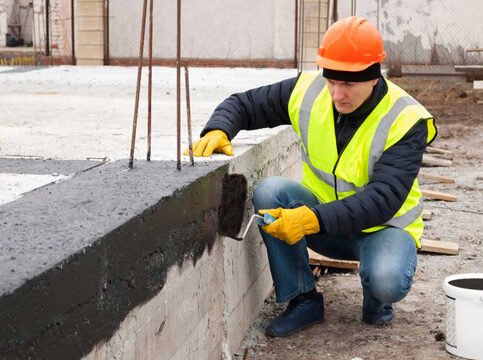
Historic Masonry Contractors protects Boston brownstones and historic foundations by stabilizing timber pile-supported homes, restoring lime-mortar stone basements, and ensuring full Article 32 GCOD compliance across Back Bay, Beacon Hill, South End, and surrounding filled-land neighborhoods.
Boston Foundation Engineering for Historic Buildings
In Boston, foundation repair is not standard construction, it is structural preservation.
Historic Masonry Contractors provides specialized foundation contracting services for properties built on timber piles, rubblestone foundations, and unstable filled land throughout Boston, MA. Our work is concentrated in 02116, 02108, and 02118, serving Back Bay, Beacon Hill, and the South End, with additional expertise across the North End and East Boston.
Unlike modern suburban foundations resting on predictable bearing soils, Boston’s historic masonry buildings often depend on 19th-century untreated timber piles driven through reclaimed marshland and fill. When groundwater drops, those piles begin to decay. Settlement follows quickly: sloping floors, cracked brick façades, separating party walls, and structural distress.
Our role is to stop that process before permanent damage occurs.
From Copley Square to the Charles River Basin, from the streets below Storrow Drive to the blocks surrounding Boston Common and Beacon Hill, our foundation contractors combine geotechnical engineering, historic masonry preservation, and full municipal compliance to protect some of Boston’s most valuable structures.
Understanding Boston’s Subsurface: Why Historic Foundations Fail
Boston is a city built on altered geography.
Large portions of Back Bay, South End, Fenway, and sections of Beacon Hill and the waterfront were once tidal flats, marshes, and mudflats. During the 19th century, these areas were filled with imported gravel, sand, ash, demolition debris, and urban fill to create buildable land.
That fill was not capable of supporting heavy masonry row houses on its own.
Builders solved this by driving untreated spruce and pine timber piles deep through the fill and soft marine sediments until they reached stable glacial till or competent bearing strata.
As long as those piles remain permanently submerged below the groundwater table, they can last indefinitely.
The problem begins when oxygen reaches them.
The Physics of Timber Pile Decay
Timber piles survive because groundwater creates an anaerobic environment.
Below the water table, oxygen is absent. Without oxygen, the fungi and bacteria responsible for wood decomposition cannot thrive. The timber remains structurally sound for generations.
When groundwater drops even a few inches, the top of the pile enters the oxygen exposure zone.
This is where decay accelerates.
Modern causes of groundwater reduction include:
-
deep utility trenching
-
leaking sewer infrastructure
-
transit tunnel construction
-
adjacent basement dig-down projects
-
improperly designed sump pump discharge
-
poor stormwater recharge management
-
impervious site paving without infiltration systems
Once exposed, the timber pile head begins microbial decomposition. The cross-sectional area reduces, compressive strength declines, and load transfer becomes uneven.
The result is differential settlement.
This is why one side of a Back Bay brownstone may sink while the neighboring structure remains stable.
The Boston Groundwater Trust monitors observation wells across these filled-land neighborhoods specifically to track these conditions and protect historic wood-pile-supported buildings. (BOSTON GROUNDWATER TRUST (BGwT))
Boston Blue Clay: The Geotechnical Challenge Beneath the Fill
Below the urban fill lies one of Boston’s most important geotechnical layers: Boston Blue Clay.
Boston Blue Clay is a dense marine clay deposited after glacial retreat. It is highly compressible, moisture-sensitive, and extremely responsive to changes in stress and loading.
Its engineering behavior requires careful foundation design because:
-
consolidation occurs slowly over time
-
bearing capacity must be conservatively evaluated
-
excess moisture reduces shear strength
-
surcharge loads can trigger differential settlement
-
improper excavation causes lateral movement in adjacent structures
Allowable bearing pressure must be calculated carefully to prevent long-term settlement.
When groundwater infiltration softens the clay matrix or structural loads become eccentric, settlement becomes progressive not sudden, but relentless.
This is especially common in South End row houses and Back Bay brownstones where original structural systems were never designed for basement lowering, rooftop additions, or heavy modern renovations.
Our foundation contractors use underpinning, helical piers, and engineered concrete transfer systems to move building loads past unstable strata and into competent support zones.
Article 32 GCOD: Foundation Work Must Meet Boston Regulations
Foundation repair in Boston is also a zoning issue.
The Groundwater Conservation Overlay District (GCOD), governed under Article 32 of the Boston Zoning Code, exists to prevent projects from lowering groundwater levels and damaging timber pile-supported buildings. (BOSTON GROUNDWATER TRUST (BGwT))
If your property is in Back Bay, South End, Beacon Hill, or another filled-land district, excavation and structural work often trigger Article 32 compliance.
This includes:
-
basement lowering
-
additions and extensions
-
underpinning projects
-
substantial rehabilitation
-
major paving changes
-
excavation below grade
Applicants must satisfy two major requirements:
1. No-Harm Certification
A Massachusetts Professional Engineer must certify that the proposed project will not negatively impact groundwater levels on your lot or adjacent properties.
2. Groundwater Recharge System
Projects must include a recharge system capable of capturing one inch of rainfall over the site’s impervious area and infiltrating it back into the soil. This is reviewed by the Boston Water & Sewer Commission (BWSC) and coordinated with the Boston Groundwater Trust.
The official GCOD zoning framework can be reviewed through the City of Boston Groundwater Conservation Overlay District (Article 32) and technical site plan requirements through BWSC Groundwater Overlay District Standards.
Historic Masonry Contractors manages the full processfrom engineering review to recharge installation and permit coordination.
Traditional Underpinning for Historic Timber Piles
Repairing decayed timber piles requires preservation-based structural intervention—not demolition.
The correct underpinning process is precise:
Step 1: Test Pit Investigation
We excavate controlled test pits to expose pile heads and confirm the extent of deterioration.
Step 2: Temporary Structural Shoring
Needle beams, cribbing, and hydraulic jacks temporarily support the building load.
Step 3: Cutting the Rotten Timber Tops
Only the decayed upper section is removed.
We cut the pile below the historic low-water line where submerged timber remains structurally sound.
Step 4: Steel Replacement Section
A steel sleeve, steel cap, or H-pile transfer element is installed over the preserved submerged timber.
This creates a new compression transfer path.
Step 5: Concrete Encasement
High-strength, low-shrink structural concrete is poured around the steel and pile interface.
This creates a permanent structural block.
Step 6: Controlled Load Transfer
The building load is carefully transferred back onto the new support system using hydraulic jacking.
This is the gold-standard preservation method for Boston brownstones.
It stabilizes the structure while preserving the viable submerged timber below.
Massachusetts structural compliance is governed by 780 CMR Chapter 18: Soils and Foundations.
Rubblestone Foundations: Why Portland Cement Causes Damage
Many homes in Beacon Hill, North End, and older East Boston neighborhoods rest on fieldstone and granite rubblestone foundations.
These were originally built with lime mortar not Portland cement.
That distinction matters.
Historic Lime Mortar
Lime mortar is:
-
flexible
-
vapor permeable
-
breathable
-
self-healing to a degree
-
compatible with historic masonry movement
It allows seasonal expansion, moisture migration, and minor settlement without trapping water.
Modern Portland Cement
Portland cement is:
-
rigid
-
dense
-
vapor impermeable
-
stronger than the surrounding historic masonry
-
prone to trapping moisture inside old stone walls
When Portland cement is applied to a historic foundation, moisture becomes trapped inside soft brick and stone.
During freeze-thaw cycles, that water expands.
The result:
-
spalling stone
-
cracked foundation walls
-
outward wall displacement
-
accelerated structural failure
This is one of the most common mistakes we correct in Boston basement restorations.
Our teams use Type O lime mortar and custom-slaked lime systems appropriate for the age and composition of the original masonry.
Preservation is compatibility not replacement.
Our Boston Service Areas
Back Bay (02116)
From Marlborough Street to Commonwealth Avenue and Beacon Street, Back Bay buildings are the classic timber pile case study.
We specialize in wood pile stabilization, groundwater protection, and brownstone underpinning near Copley Square and the Charles River Basin.
Beacon Hill (02108)
Near Charles Street, Mount Vernon Street, and the Massachusetts State House, we restore historic stone basements and stabilize tight urban foundations where excavation access is limited and preservation standards are strict.
South End (02118)
Along Tremont Street, Columbus Avenue, and Harrison Avenue, settlement and moisture intrusion are common due to fill conditions and aging structural systems.
We provide deep underpinning and lime-mortar foundation restoration throughout the district.
North End
Older masonry structures near Hanover Street and Commercial Street require careful historic intervention, especially where original stone walls have been patched with incompatible materials.
East Boston
High water tables, marine soils, and waterfront structural movement demand specialized concrete crack repair, waterproofing, and foundation stabilization.
Common Signs You Need a Foundation Contractor in Boston
Call for evaluation if you notice:
-
sloping or uneven floors
-
doors or windows sticking
-
diagonal stair-step cracks in brick
-
separation between party walls
-
basement wall bowing
-
persistent groundwater seepage
-
widening plaster cracks
-
sinking front stoops
-
settlement near alley walls
-
movement after nearby excavation projects
In Boston, these are often groundwater and pile-related—not simply “old house settling.”
Early intervention prevents major structural loss.
Foundation Contractor FAQs
How do I know if my Boston home is built on wood piles?
Most brownstones and row houses in Back Bay, South End, and filled-land sections of Beacon Hill are timber pile-supported. Signs of failure include sloping floors, cracks in plaster or brick, and sticking windows. The Boston Groundwater Trust maintains neighborhood groundwater and pile monitoring resources.
What does underpinning cost in Boston?
For a typical three- to four-story historic row house, underpinning commonly ranges from $80,000 to $250,000+, depending on access, number of affected piles, excavation depth, and municipal compliance requirements.
Do I need permits for basement waterproofing?
Minor crack sealing usually does not require permits. Excavation, sump systems, basement lowering, and historic wall modification typically require ISD review and often Article 32 GCOD compliance.
Why can’t I use concrete to repair my stone basement?
Because historic rubblestone walls were designed to breathe. Dense Portland cement traps moisture and causes freeze-thaw damage. Lime mortar is structurally and historically correct.
Why does groundwater matter near Storrow Drive and the Charles River Basin?
These filled-land districts rely heavily on timber pile foundations. Groundwater stability protects those piles from oxygen exposure and decay. Recharge systems and proper drainage design are critical.
Boston Foundation Contractors with Preservation Expertise
Historic Masonry Contractors does not approach Boston foundations like generic residential repair.
We work where structural engineering, historic preservation, and municipal groundwater compliance intersect.
Whether your property overlooks the Charles River Basin, sits near Boston Common, faces settlement in Back Bay, or requires basement stabilization beneath a South End brownstone, our team provides engineering-grade solutions designed for Boston’s actual subsurface conditions.
Historic foundations require historic expertise.
That is the standard we build to.